What Is InterLink “Mining”? Understanding Proof of Personhood and Human-Centered Web3 Identity

- Updated Time: 23-12-2025
- 27512 times read
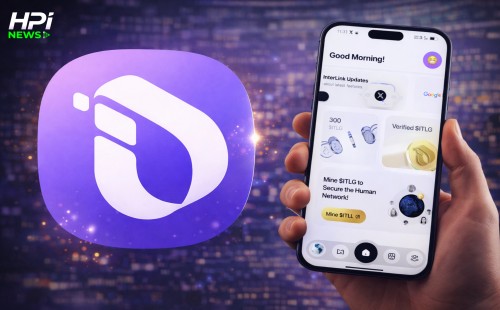
InterLink protocol, Proof of Personhood blockchain, Web3 identity verification, human mining crypto, InterLink Web3 project, decentralized identity
InterLink’s “mining” is not traditional crypto mining. It is a Web3 protocol based on Proof of Personhood, verifying unique human identity on the blockchain. This approach aims to prevent bots, Sybil attacks, and fake accounts while enabling fair participation in decentralized networks.

The InterLink “mining” project represents a fundamentally different approach from traditional cryptocurrency mining. Instead of relying on computational power, energy consumption, or hardware competition, InterLink operates as a Web3 identity protocol built on a Proof of Personhood mechanism.
Step 1: Why InterLink Is Not Traditional Mining
In conventional crypto networks, mining usually involves solving complex mathematical problems to secure the blockchain. InterLink eliminates this model entirely. There is no hash power, no GPUs, and no energy-intensive competition.
Instead, InterLink focuses on verifying that each participant represents a real, unique human being.
Step 2: What Is Proof of Personhood?
Proof of Personhood is a mechanism designed to confirm that:
One account = one real human
No bots or automated identities
No duplicate or Sybil accounts
By anchoring identity verification to human uniqueness rather than computing power, InterLink aims to create a more fair and inclusive Web3 environment.
Step 3: How InterLink “Mining” Works
InterLink’s mining process is better described as participation-based verification rather than resource extraction.
Participants:
Verify their unique identity through the protocol
Become recognized as a human node on the blockchain
Contribute to network trust and decentralization
This system rewards human presence, not hardware dominance.
Step 4: Why This Model Matters for Web3
One of the biggest challenges in Web3 is the rise of bots, fake users, and Sybil attacks. These issues distort governance, token distribution, and ecosystem fairness.
InterLink’s human-first model offers:
Fair access to decentralized networks
Stronger governance integrity
Reduced manipulation by automated systems
Step 5: Use Cases Beyond “Mining”
The Proof of Personhood framework can support:
DAO governance (one person, one vote)
Fair airdrops and rewards
Sybil-resistant DeFi participation
Trusted Web3 social platforms
This positions InterLink as an identity infrastructure layer, not just a token project.
Outlook
InterLink’s approach reflects a broader shift in Web3—from computation-driven security to human-centered trust systems. If widely adopted, Proof of Personhood protocols could play a critical role in building more equitable and sustainable decentralized ecosystems.